Define the device context
Describe the intended use, operating environment and the battery's role within the device risk assessment.
Jetray’s corporate website describes cell selection, BMS design, prototyping and custom pack services. Use this brief to discuss the scope and feasibility of your own project.
Battery selection guidance for medical-equipment development teams. Product references support an engineering discussion; device suitability and compliance require model-specific validation.
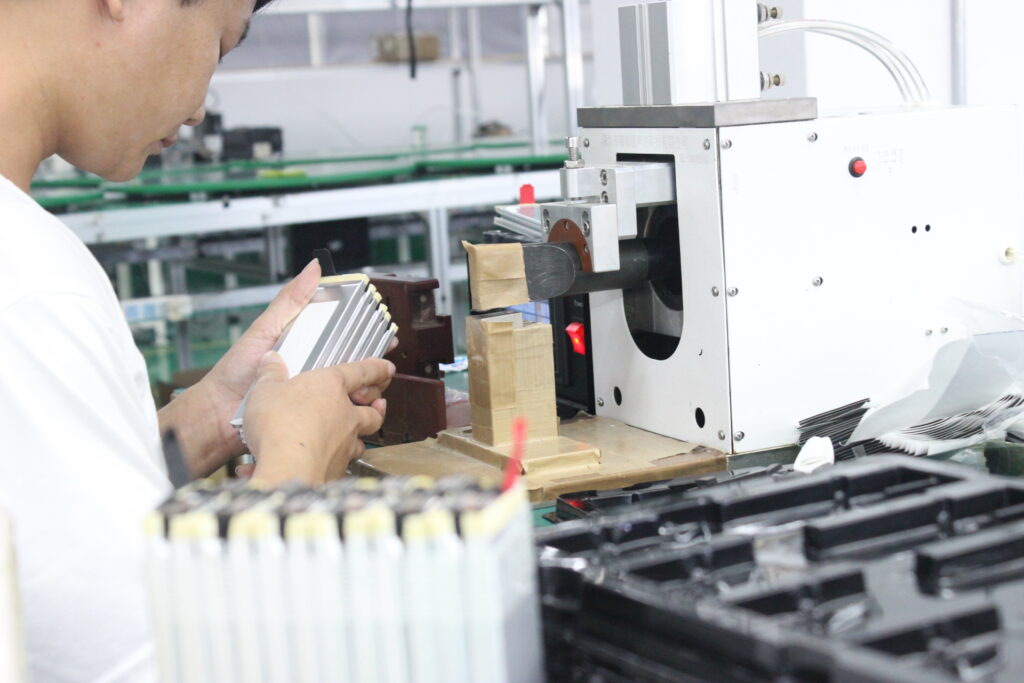
Photograph from the Jetray corporate factory page.
Describe the intended use, operating environment and the battery's role within the device risk assessment.
Confirm electrical limits, protection behavior, thermistor signals, identification and communication as applicable.
Agree test evidence, traceability and change control with the equipment manufacturer. A catalogue reference is not device approval.
Nominal system voltage, allowable input window, continuous current, peak current and peak duration.
Available envelope, fixing points, weight constraints, cable routing, connector and polarity.
Charger model, charging opportunities, temperature sensing and required BMS or communication signals.
Intended use, target markets, sample quantities, forecast volume, required test evidence and revision controls.
Share the load, dimensions and intended use. Ask for a current model specification and a project review.